
How to Finance New Construction Projects: A Guide for Real Estate Investors
Building a new investment property from the ground up can be an exciting opportunity for real estate investors. Whether you’re developing a single-family home, constructing a rental property, or planning a small multifamily development, securing the right financing is one of the most important steps toward a successful project.
Unlike traditional mortgages, new construction loans for real estate investors are designed to help finance the building process, often providing funds in stages as construction progresses.
At Star Rich Funding, we help investors, builders, and developers explore construction financing options through our network of private and alternative lending partners.
In this guide, we’ll explain how new construction financing works, what lenders typically look for, and how to prepare your next investment project for funding.
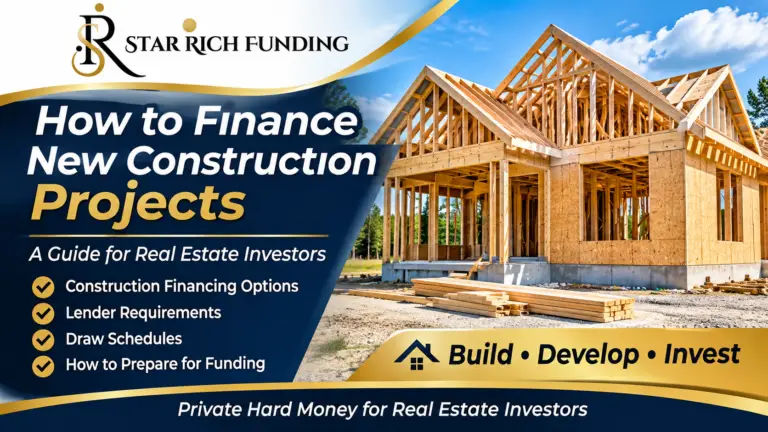
What Is a New Construction Loan?
A new construction loan is a financing solution designed to help cover the costs of building a property from the ground up.
Depending on the lender and loan program, financing may help cover:
Land acquisition and eligible site preparation
Construction materials and labor
Contractor and subcontractor expenses
Building permits and inspections
Architectural and engineering costs
Other approved construction expenses
Unlike a traditional mortgage that generally provides funds at closing, construction financing typically releases money through a series of scheduled payments known as construction draws.
These funds are tied to project progress and lender requirements.
How Do New Construction Loans Work?
Understanding the financing process can help investors manage construction costs and avoid unnecessary delays.
Step 1: Evaluate Your Investment Project
Before approaching a lender, investors should establish a clear development plan.
This includes identifying the property, estimating construction expenses, reviewing comparable property values, and determining the project’s expected profitability.
A well-prepared project plan demonstrates that the investor understands the financial requirements and potential risks.
Step 2: Prepare Your Construction Budget
Lenders typically want a detailed breakdown of anticipated expenses.
Your construction budget should include materials, labor, permits, contractor costs, site improvements, and contingency reserves.
Accurate budgeting is essential because unexpected construction expenses can affect your project’s timeline and financing needs.
Step 3: Submit Your Financing Application
Once your project details are organized, you can begin exploring available loan programs.
Lenders may evaluate your credit profile, available capital, construction experience, project location, and estimated completed property value.
At Star Rich Funding, we work with multiple lending partners to help identify financing options that may fit your project.
Step 4: Receive Construction Draws
After approval and closing, construction funds are typically distributed according to an established draw schedule.
For example, a lender may release funds as the project completes major milestones such as the foundation, framing, mechanical systems, and finishing work.
Inspections or other documentation may be required before each draw is released.
Step 5: Complete Construction and Repay the Loan
Once construction is complete, the investor generally follows the repayment strategy established before the project began.
Depending on the financing program, this may involve selling the completed property, refinancing into a long-term rental property loan, or obtaining another approved permanent financing solution
What Types of New Construction Projects Can Be Financed?
Construction financing may be available for several investment property types.
Single-Family Investment Homes
Investors may construct single-family properties intended for resale or long-term rental income.
Speculative or Spec Homes
Builders and developers may use construction financing to build properties intended for sale after completion.
Multifamily Construction
Eligible duplexes, triplexes, fourplexes, and larger residential developments may qualify for specialized financing programs.
Land Acquisition and Ground-Up Development
Some programs combine the purchase of eligible land with the costs of developing and constructing the property.
The availability of each program depends on the lender, project location, borrower qualifications, and overall feasibility.
What Do Lenders Look for When Financing New Construction?
Construction lenders generally evaluate several important factors before approving a project.
1. Credit History
Your credit profile helps lenders evaluate your financial background and repayment history.
Some programs accommodate different credit profiles, although stronger credit may provide access to more favorable financing options.
2. Construction Experience
Previous development, renovation, or construction experience can strengthen an application.
Some lenders may also consider qualified first-time investors who work with experienced, licensed general contractors.
3. Land Value and Equity
If you already own the land, the property’s available equity may help satisfy part of the lender’s required investment, depending on the program.
4. Construction Budget and Timeline
Lenders want to see realistic cost estimates, a clear construction schedule, and adequate contingency planning.
5. Completed Property Value
The estimated value of the property after construction is an important factor in determining the financing available.
Lenders may use an appraisal based on the proposed completed improvements.
6. Exit Strategy
An exit strategy explains how you intend to repay the construction loan.
Common strategies include selling the property or refinancing into long-term financing.
A clear and realistic exit strategy is especially important for short-term construction loans.
How Much Can You Borrow for a New Construction Project?
The amount of financing available depends on the project’s total cost, estimated completed value, land equity, borrower qualifications, and lender guidelines.
Some lenders evaluate financing using:
Loan-to-Cost (LTC): The loan amount compared with eligible total project costs.
Loan-to-Value (LTV): The loan amount compared with the lender’s accepted property value, which may be based on the completed project.
For example, suppose an investor plans a construction project with the following estimated costs:
| Project Expense | Estimated Cost |
|---|---|
| Land acquisition | $100,000 |
| Construction expenses | $300,000 |
| Permits, professional fees, and contingency | $50,000 |
| Total project cost | $450,000 |
If a lender offers 80% financing based on eligible project costs, the potential loan amount would be $360,000.
The investor would need to account for the remaining $90,000, plus any expenses not financed by the lender.
This is a hypothetical illustration, not a financing offer. Actual loan amounts, equity requirements, and eligible expenses vary.
Can You Get a Construction Loan if You Already Own the Land?
Yes. Owning land may provide an advantage when applying for construction financing.
Some lenders allow eligible land equity to count toward the borrower’s required contribution.
For investors who own land free and clear, certain programs may provide substantial financing for approved construction expenses.
However, land ownership alone does not guarantee approval.
Lenders may still review zoning, permits, access, utilities, project feasibility, available reserves, and the estimated completed property value.
Common Mistakes to Avoid When Financing New Construction
Even experienced investors can encounter challenges when financing development projects.
Underestimating construction expenses: Failing to include contingency reserves can create funding shortages.
Starting without a realistic timeline: Permit delays, weather, contractor availability, and inspections may affect project completion.
Not understanding the draw schedule: Investors should understand when funds become available and whether they need sufficient cash to pay expenses before reimbursement.
Overestimating completed property value: An unrealistic valuation can affect loan eligibility and the investor’s expected return.
Failing to establish an exit strategy: Short-term financing requires a practical repayment plan.
Preparing for these issues before applying can help investors avoid unnecessary complications.
Why Work with a Loan Broker for Construction Financing?
Finding the right construction lender can take time because financing programs vary widely.
Some lenders focus on experienced developers, while others may consider smaller residential projects or qualified first-time builders.
Working with Star Rich Funding gives investors access to a network of lending partners offering different financing options.
Our goal is to help you evaluate available programs based on your construction budget, property type, experience, financing needs, and investment strategy.
Instead of approaching only one lender, you can explore options that may better match your project.
Frequently Asked Questions About New Construction Loans
Can a first-time investor qualify for a construction loan?
Possibly. Some lenders consider qualified first-time investors, particularly when they work with experienced contractors and have a strong project plan. Requirements vary by lender.
Do I need building permits before applying?
Not always. Some lenders will review projects while permits are pending, but permits or other approvals may be required before closing or before construction funds are released.
Are construction loans interest-only?
Many construction loan programs offer interest-only payments during the construction period. The payment structure and the amount on which interest is charged depend on the loan agreement.
http://Consumer Financial Protection Bureau
Can I finance both the land and construction costs?
Yes. Certain lenders offer financing that includes eligible land acquisition and construction expenses. Other programs may require separate financing.
What happens when the construction loan matures?
The remaining loan balance generally must be repaid according to the agreement. Investors may repay through a property sale, an approved refinance, or another permitted repayment source.
Can I refinance a completed construction project into a DSCR loan?
Potentially. If the completed property qualifies as a rental investment, a DSCR loan may be an option. Eligibility depends on rental income, property value, borrower qualifications, and lender requirements.
Ready to Finance Your Next Construction Project?
Whether you’re purchasing land, planning a single-family development, or preparing a multifamily investment project, having the right financing strategy can make a significant difference.
Star Rich Funding helps real estate investors explore new construction loan options through our network of lending partners.
Learn more about our Acquisition & New Construction Loan Programs.
Ready to discuss your project?
Star Rich Funding
Private Hard Money for Real Estate Investors
Email: Richard@starrichfunding.net
Website: https://starrichfunding.net
Disclaimer
Star Rich Funding is a loan brokerage and is not a direct lender. Loan programs, interest rates, fees, terms, loan amounts, and qualification requirements vary by lender. All financing is subject to lender approval, underwriting guidelines, borrower qualifications, property eligibility, and applicable laws. Financing is not guaranteed. Examples provided are for educational purposes only and do not constitute a loan commitment or offer of credit.